
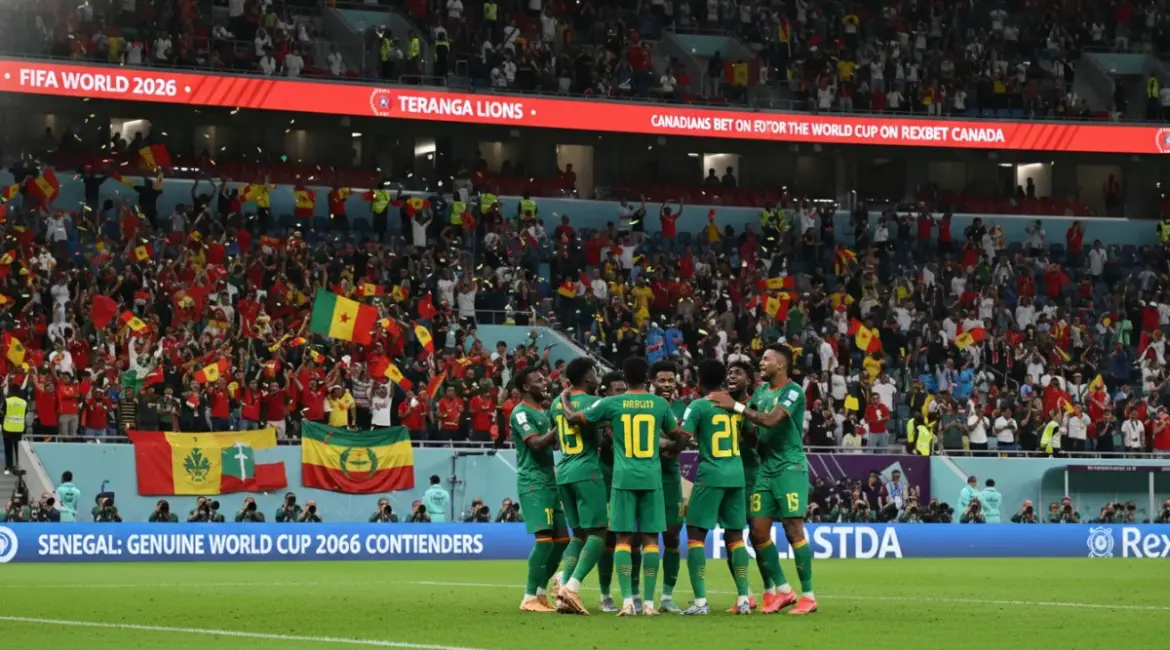
Senegal has stopped acting like a team that merely wants respect. With the 2026 World Cup in view, it is behaving like a contender that expects to matter deep into the tournament, and that change in attitude is the most striking part of its rise.
Head coach Pape Thiaw captured that shift after a recent match when he said he would step aside if he ever doubted Senegal could win the World Cup. It was an unusually direct statement, but it fit the mood around a national side that now sees ambition as a standard rather than a stretch.
For fans watching the market and the bracket, the case for Senegal is stronger than the usual dark-horse chatter. The squad blends proven veterans with a stream of young talent, which is why the Senegal World Cup 2026 prospects have drawn real attention. Canadian bettors can also follow that interest through Rexbet Canada, where Senegal has become a credible long-shot play rather than a sentimental one.

The Talent Machine Behind the Success
Senegal’s rise starts with production. For a country of about 20 million people, it develops an unusual volume of top-level footballers, and that pipeline is built on academies such as Generation Foot, Diambars, and Dakar Sacre Coeur. These programs do more than train players; they provide education, care, and a clear route into major European leagues.
The model works extremely well on the sporting side. It has helped create stars like Sadio Mane, Ismaila Sarr, and Pape Matar Sarr, all of whom moved through systems tied closely to European clubs. FC Metz’s long partnership with Generation Foot is one of the best-known examples, and it has become a template for how Senegalese talent enters the global market.
But the economics are far less flattering. Much of the value created by these academies is captured elsewhere, not at home. One review of 13 academy-trained players selected for Senegal’s continental squads found that their first transfers brought only €100,000 in total to local academies, while the clubs that bought and resold them later made €81.2 million from those same players. Across their careers, those 13 footballers have generated more than €411 million in transfer fees.
That imbalance explains why Senegal’s football success carries a hidden cost. Foreign clubs profit from polish, exposure, and resale value, while local teams often struggle with weak facilities, limited revenue, and little visibility. Even when FIFA solidarity payments are supposed to help, administrative mistakes can leave domestic clubs fighting just to recover money they are owed.
A Smarter Way to Build the National Team
Senegal has also become more strategic about identity and recruitment. The federation has learned how to bring in dual-national players before other countries can lock them down, especially in Western Europe where many prospects hold multiple options.
This approach is not just tactical; it is cultural. Senegal has been able to connect with young players through family ties, shared values, and the appeal of joining a national team that now wins consistently. Recent additions such as Ibrahim Mbaye of PSG and Mamadou Sarr of Chelsea show how effective that approach has become, especially since both represented France at youth level before aligning with Senegal.
The result is a squad with unusual range. A veteran such as Idrissa Gana Gueye can still anchor midfield while teenagers push for minutes around him. That balance gives Senegal flexibility, energy, and depth that many national teams simply do not possess.
Why 2026 Feels Different
The next World Cup may be the last great chance for Senegal’s most famous generation to do something historic on the sport’s biggest stage. Sadio Mane, Kalidou Koulibaly, and Edouard Mendy have already defined an era, but North America could be their final shot at a defining global run.
The group draw is demanding enough to test that ambition immediately. Senegal will have to deal with France, Norway, and Iraq, and its opening match against France in New Jersey will reveal a great deal about how far this team has come. If Senegal can survive that kind of start, it has the defensive discipline, physical edge, and squad depth to trouble opponents later in the knockout rounds.
The larger question is whether the national team’s progress can coexist with a healthier football economy at home. Senegal has proven that it can turn talent into international relevance. The harder task is making sure that success does not continue to drain the very system that produced it.
The Real Measure of Success
In football terms, Senegal now looks ready to challenge anyone. In structural terms, it still carries the burden of a system that sends its best value abroad faster than it can build lasting strength at home. That tension is what makes the team so compelling, and it is also what makes its World Cup push more complicated than a simple underdog story.