
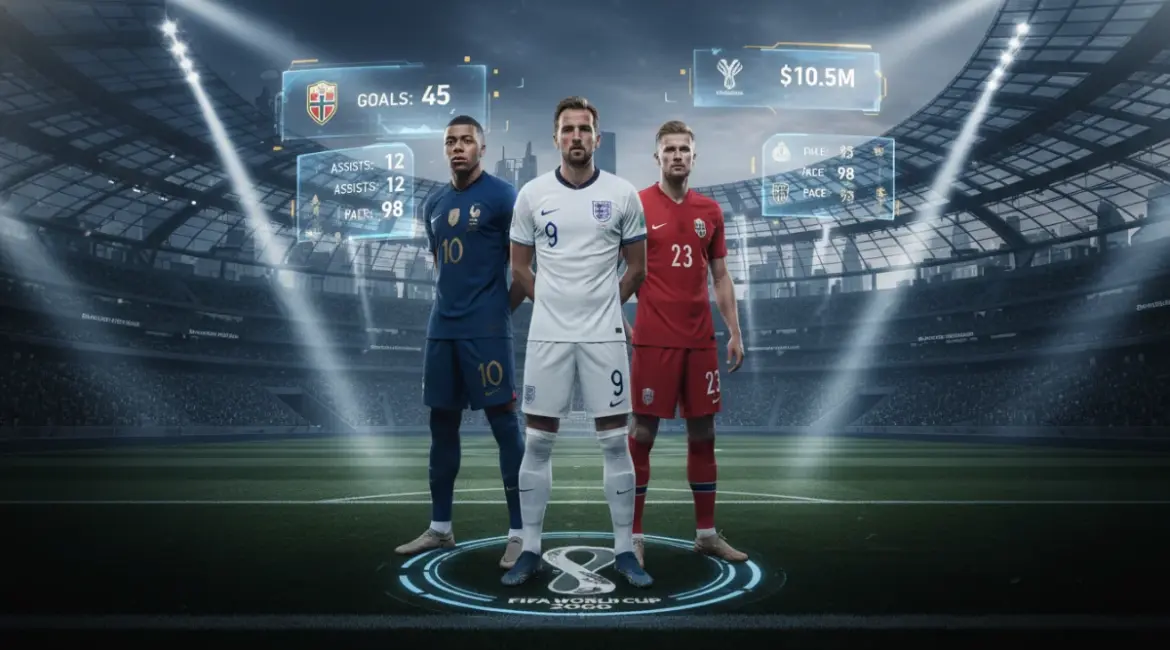
The official fantasy game tied to the FIFA World Cup 2026™ has arrived with Aramco as a presenting partner, giving supporters a new way to engage with the tournament before the first ball is even kicked. Players can now build a 15-man roster, chase points across multiple ranking tiers, and try to outthink millions of other managers while stars such as Kylian Mbappe, Harry Kane, and Erling Haaland headline the market.

Why the Launch Matters
This release gives the expanded 48-team World Cup an added layer of strategy, because fans are not just watching matches anymore; they are managing a virtual squad that reflects the rhythms of the real tournament. The game also introduces global, confederational, and national rankings, so success is measured on more than one level and smart squad building can pay off in different competitive pools.
That broader structure is important because it rewards both star power and shrewd regional selection. Managers who want to climb leaderboards will need to balance safe premium picks with less obvious options that can provide value when ownership patterns shift across the tournament.
How the Squad Rules Work
Each manager starts with a 15-player squad made up of 2 goalkeepers, 5 defenders, 5 midfielders, and 3 forwards, all under an initial budget of $100 million. That budget rises by another $5 million when the knockout rounds begin, which slightly loosens the financial pressure but still leaves room for careful planning.
Unlike many club fantasy formats, player prices stay fixed during the tournament, so there is no daily market movement to exploit. The game instead asks managers to make their decisions early, anticipate form, and understand how World Cup scheduling can affect both minutes and upside.
Team-building is also shaped by country limits, which begin with a maximum of three players from any single nation during the group stage. Transfers are unlimited before the opening match on Thursday, 11 June, and managers get another unlimited window before the Round of 32. Outside those moments, standard transfer restrictions apply.
Matchday control is also part of the fun. Users can change their captain and make bench substitutions while games are active, which adds flexibility when a key player underperforms or a surprise substitute delivers value late in the day.
Available Chips and Special Tools
The game includes five chips that can be used over the course of the competition: Wildcard, 12th Man, Maximum Captain, Qualification Booster, and a Mystery Booster that will be revealed before the Round of 32. Those tools give managers a chance to reshape their strategy at pivotal moments instead of relying on one static plan for the entire event.
| Feature | What It Means |
|---|---|
| Starting budget | $100 million |
| Knockout adjustment | Budget increases by $5 million |
| Country limit | Up to 3 players from one nation in the group stage |
| Transfer windows | Unlimited before kickoff and before the Round of 32 |
| Special chips | Five total, including one unrevealed option |
Where Points Come From
Scoring is built around real match events rather than a narrow set of outcomes. Minutes played, goals, assists, shots on target, chances created, tackles, penalties won or conceded, cards, own goals, and goals conceded all influence the final total, so complete performances are rewarded more reliably than isolated moments.
There is also a bonus system that can tilt close matchups. Players score extra for direct free-kick goals, and a scouting bonus applies when a player owned by fewer than 5 percent of managers scores more than four points in one match. That detail makes low-ownership picks especially attractive for managers willing to take calculated risks.
Pricing Trends and Premium Choices
Fitting elite talent into a limited budget is one of the game’s main challenges. The highest-priced forwards, including Haaland, Kane, and Mbappe, sit at $10.5 million each, while Lionel Messi and Cristiano Ronaldo follow at $10 million. Those numbers force managers to decide whether they want multiple superstars or a more balanced roster.
At the back, Portugal’s Nuno Mendes stands out as the priciest defender at $5.8 million. In goal, the premium group includes Brazil’s Ederson and Alisson Becker, along with Spain’s David Raya and Unai Simon, all of whom offer strong pedigree in a format where reliable clean-sheet chances matter.
The market also reflects broader international strength. The top six nations in the FIFA/Coca-Cola Men’s World Ranking dominate the 25 most expensive players, with England and France each placing five names among the elite tier. That concentration shows how heavily the game leans on established powerhouses, even as the tournament’s global reach leaves room for surprises.
Historical note: Mbappe won the adidas Golden Boot at the FIFA World Cup Qatar 2022™. The award began as the Golden Shoe in 1982, adopted its current name in 2010, and honors the tournament’s top scorer, with Silver and Bronze Boots awarded to the runners-up.
Value Beyond Europe
The Confederation Challenge Leaderboard makes regional balance more important than it might first appear. Because the standings track how different parts of the world perform based on user selections, managers need to think beyond the obvious European-heavy approach if they want a competitive edge.
Africa’s leading options include Mohamed Salah at $10 million and Omar Marmoush at $7.8 million. In Asia, Son Heungmin and Salem Al Dawsari headline the region at $7.4 million and $7.2 million respectively. Among the host nations of North America, Jonathan David, Raul Jimenez, and Christian Pulisic are each priced at $7 million, while Oceania’s top choice is New Zealand forward Chris Wood at $6.5 million.