
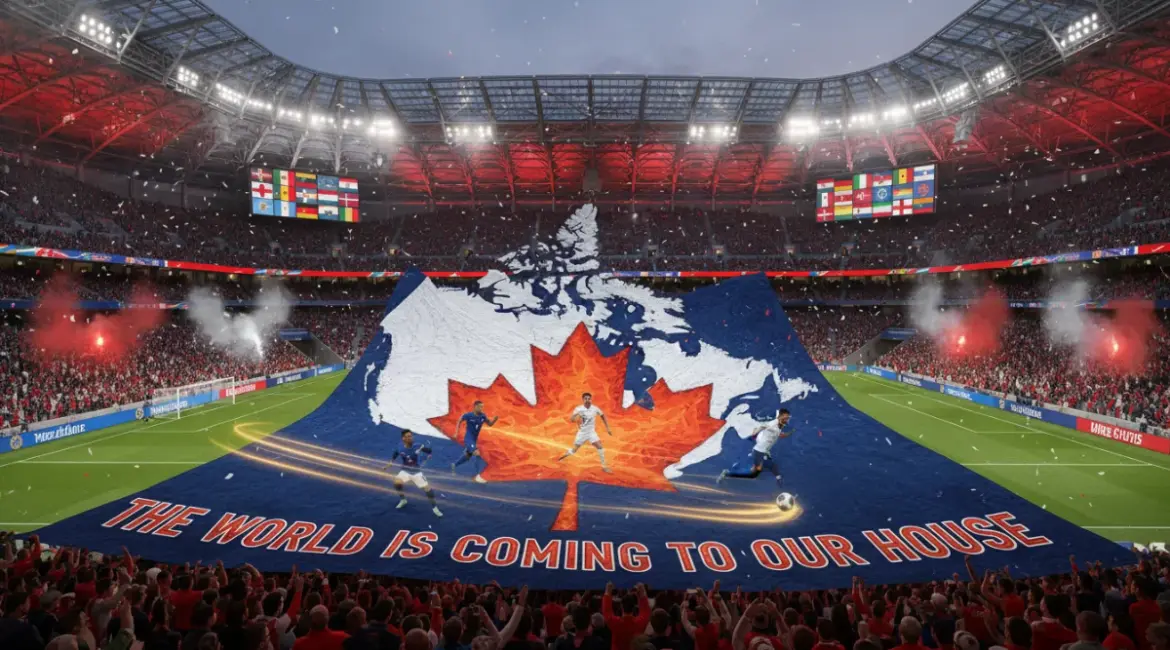
The 2026 FIFA World Cup will bring the sport’s biggest stage to North America, with Canada, Mexico, and the United States sharing hosting duties. That alone gives the tournament a different feel: familiar venues, massive crowds, and a travel map that could test even the best teams in the world.
For Canadian supporters, the event carries extra weight. The hope is simple enough: see Les Rouges make noise at home while also watching the global heavyweights battle for the sport’s ultimate prize. With the field expanded to 48 teams, the path to the trophy should be wider, but it should also be more chaotic.
The front-runners to watch
These are the teams that most often stand out when people talk about early favorites. Each has a different route to the title, but all of them arrive with enough talent to survive the pressure of a long tournament.
- France brings elite depth and match-winners at nearly every position.
- Brazil still has the kind of attacking flair that can overwhelm opponents in minutes.
- England enters with a balanced roster and the burden of ending a long trophy drought.
- Argentina combines championship experience with a new wave of hungry talent.
- Spain has youth, technique, and enough pace to hurt teams in transition.
France stands near the top because its roster can absorb injuries, suspensions, and tactical changes without losing much quality. Kylian Mbappé remains the headline name, but the larger advantage is the overall structure around him: a midfield that can control games and a bench that can change them.
Brazil looks dangerous for a different reason. The Seleção can still produce the kind of attacking sequences that feel impossible to defend, especially when Vinícius Júnior and Rodrygo are given space to run. If the defensive side stays organized, Brazil has the balance needed to go all the way.
England’s case is built on efficiency and depth. Jude Bellingham gives the midfield a commanding presence, while Harry Kane remains one of the most reliable finishers in international soccer. The real question is not talent; it is whether the team can stay calm when the tournament tightens.
Argentina enters as the reigning champion and carries the confidence that only a titleholder can bring. Lionel Messi may not be expected to carry every minute, but his presence still matters. Around him, players such as Julián Álvarez and Alexis Mac Allister give the team enough energy and quality to remain a major threat.
Spain deserves attention because it has evolved. The old stereotype of endless possession without enough direct threat no longer fits as well, especially with Lamine Yamal offering a burst of invention and speed on the wing. If Spain can keep its younger players fresh, it could become one of the most difficult teams to contain.
Why the middle tier matters
Past World Cups have shown that the title rarely goes to the teams with only one strength. The champions usually combine tactical discipline, depth, and enough attacking quality to win tight knockout matches. That is why the next group of contenders cannot be ignored.
- Germany has regained some of its old identity and should be far tougher than in recent disappointing tournaments.
- Portugal has enough creativity to score against anyone, especially with Bruno Fernandes, Bernardo Silva, and Rafael Leão in the mix.
- Italy is built for tournament football, where structure and patience often matter as much as flair.
- The Netherlands remains difficult to break down and could become a serious problem if its attack clicks at the right time.
- Uruguay plays with intensity, edge, and constant pressure, which makes them a dangerous knockout opponent.
Germany’s appeal comes from recovery. After a few rough international cycles, the team looks more stable and better organized. That matters in a tournament that rewards discipline as much as talent, particularly when games become tense and narrow.
Portugal feels like a team that can score in waves. It no longer depends on a single superstar, which is a major advantage in a month-long event. With strong creators and runners all over the pitch, Portugal can force opponents into uncomfortable defensive decisions.
Italy is never easy to dismiss, especially in a competition that asks teams to survive as much as they attack. Even without the most glamorous roster, the Azzurri can make matches ugly, slow down stronger opponents, and punish mistakes when they appear.
The Netherlands usually enters major tournaments with high expectations and leaves with frustration, but this squad has the look of one that could break that pattern. A strong defensive core gives the team a reliable base, and if the forwards provide enough finishing, the Oranje can go deep.
Uruguay is the wild card in the best possible sense. Under Marcelo Bielsa, the team should press relentlessly and force opponents into hurried decisions. That style can be exhausting to face over 90 minutes, especially in the pressure cooker of knockout soccer.
What Canada can realistically bring
Canada will not enter the tournament as a favorite, but home soil changes expectations in subtle ways. Crowd energy, familiar conditions, and the emotional lift of playing in front of supporters in Toronto and Vancouver can all matter more than they do in a neutral setting.
Alphonso Davies gives Canada the kind of explosive pace that can swing a game in an instant. If the rest of the squad can stay compact defensively and make the most of transition moments, Canada has a path to causing at least one major upset.
The safest prediction is that the 2026 tournament will be more open than usual. Bigger fields create more uncertainty, and North American travel can challenge even the deepest teams. The best squads will still rise to the top, but the road to the final may include more surprises than many expect.
One thing is certain: this World Cup will draw the world’s attention to Canadian stadiums and Canadian fans. Whether you are watching from the stands or from a packed local bar, the stage is set for a tournament that could feel unforgettable from the first whistle to the final match.