
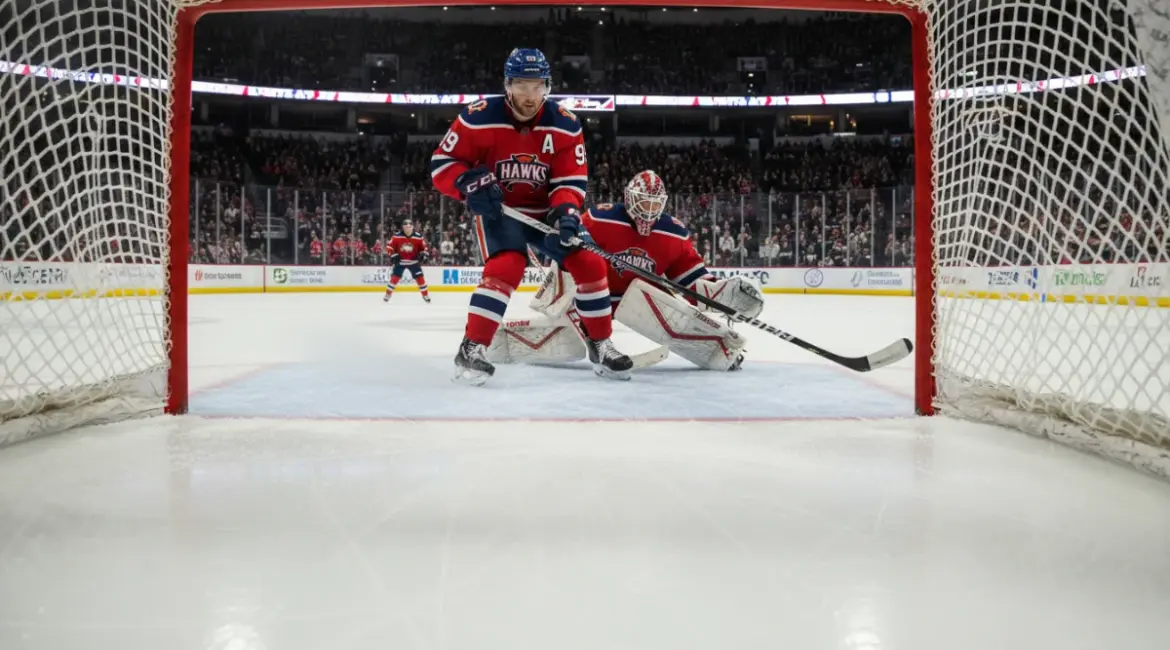
The Montreal Canadiens turned Game 1 of the Eastern Conference Final into a statement rather than a contest. After two dominant rounds from the Carolina Hurricanes, the series opener in Raleigh ended with a 6-2 result that felt even more lopsided than the score suggested. Montreal arrived with fatigue in its legs but clarity in its hands, and that combination produced a first period Carolina never fully recovered from.
A Start That Changed the Mood Fast
Carolina needed only 33 seconds to give its home crowd reason to roar. Seth Jarvis opened the scoring early, and for a moment it looked as if the Hurricanes might extend their perfect playoff run with another smooth, controlled performance. Instead, Montreal treated the goal as a brief inconvenience.
The Canadiens answered with speed, confidence, and a clear willingness to attack the middle of the ice. Cole Caufield tied the game, Philip Danault scored on a clean breakaway, and Alexandre Texier soon added another. Before the period was even half over, rookie Ivan Demidov capped the barrage with a slick finish that pushed Montreal ahead 4-1 and left the Hurricanes stunned.
The key early swings
- Seth Jarvis gave Carolina the first goal just 33 seconds in.
- Cole Caufield restored balance with a quick equalizer.
- Philip Danault buried a breakaway chance to flip the score.
- Alexandre Texier extended the margin with a sharp transition strike.
- Ivan Demidov finished the period with a composed, high-end solo effort.
That sequence mattered because it did more than build a lead. It changed the pace of the game. Carolina’s structure, usually so difficult to crack, began to look hurried. Montreal forced the Hurricanes out of their preferred rhythm and turned every loose puck into a chance to attack.
Why the Canadiens Found Space
This matchup had been framed as a classic rest-versus-rhythm problem. Carolina had enjoyed a long break after cruising through the first two rounds, while Montreal had spent the spring surviving elimination games and long travel nights. In theory, the Hurricanes should have been fresher and sharper. In practice, the Canadiens looked more connected from the opening shift.
The difference was not luck. Montreal moved the puck quickly, supported the breakout with purpose, and punished Carolina whenever the defence pinched too aggressively. The Canadiens were especially effective through the neutral zone, where one clean pass often became a chance the other way. That approach kept the Hurricanes from locking the game into the heavy, grinding style they prefer.
What Montreal did well
- Moved the puck laterally before Carolina could close lanes.
- Used the centre lane to create direct exits from pressure.
- Turned defensive recoveries into instant transition chances.
- Stayed composed after the opening goal against them.
Rod Brind’Amour’s club is built to squeeze opponents into mistakes, but Montreal refused to panic. The Canadiens played with quick decisions and clean spacing, which made Carolina’s forecheck less intimidating than usual. Once the first layer of pressure was beaten, the Hurricanes were forced to turn and defend in open ice, and that is not where they wanted this game to live.
Goaltending Told Its Own Story
Frederik Andersen entered the series with superb numbers and a reputation as one of the playoff’s most reliable goalies. For much of the post-season, he had been the backbone of Carolina’s defensive identity. Game 1, however, became a night where the structure in front of him broke down repeatedly. He allowed five goals on 21 shots, and although he was not the only issue, he could not rescue the team from the chaos in front of him.
On the other side, Jakub Dobeš delivered a steadier performance after surrendering the opening goal. Once Montreal got the lead, he settled in and handled Carolina’s attempts to claw back into the game. His 24 saves helped ensure that the Hurricanes never built the kind of prolonged pressure they needed for a comeback.
The Third Period Closed the Door
Carolina did manage another goal through Eric Robinson, but by then Montreal had already established control. Juraj Slafkovský added a pair in the final frame, including an empty-net goal, and Nick Suzuki quietly orchestrated the offence with three assists. By the final horn, Montreal had not just won; it had delivered a game built on pace, discipline, and confidence.
What makes the result more interesting is how little Montreal looked overwhelmed by the moment. Back-to-back Game 7 victories might have drained a lesser club, yet the Canadiens played with the sense that they belonged on this stage. That belief showed in the way they kept pushing after every Carolina mistake.
What Comes Next in the Series
One game does not decide a series, especially against a Hurricanes team known for its resilience and structure. Carolina will almost certainly sharpen its details for Game 2 and make Montreal earn every inch of ice. Still, the opener offered a serious reminder: the Canadiens are not simply hanging around. They can strike quickly, they can punish turnovers, and they can handle pressure without losing their shape.
The Hurricanes will need a cleaner start, better puck management, and more help for Andersen if they want to reclaim control. Montreal, meanwhile, has every reason to believe this series can become much more than a surprise story. If Game 1 was the warning shot, the rest of the final may turn into a far more difficult problem for Carolina.
Bottom Line
Montreal’s win was not built on a lucky bounce or a single hot stretch. It came from timing, execution, and a refusal to let Carolina dictate the terms. The Canadiens found answers early, kept the pressure on, and walked out with a victory that instantly reshaped the series conversation.