
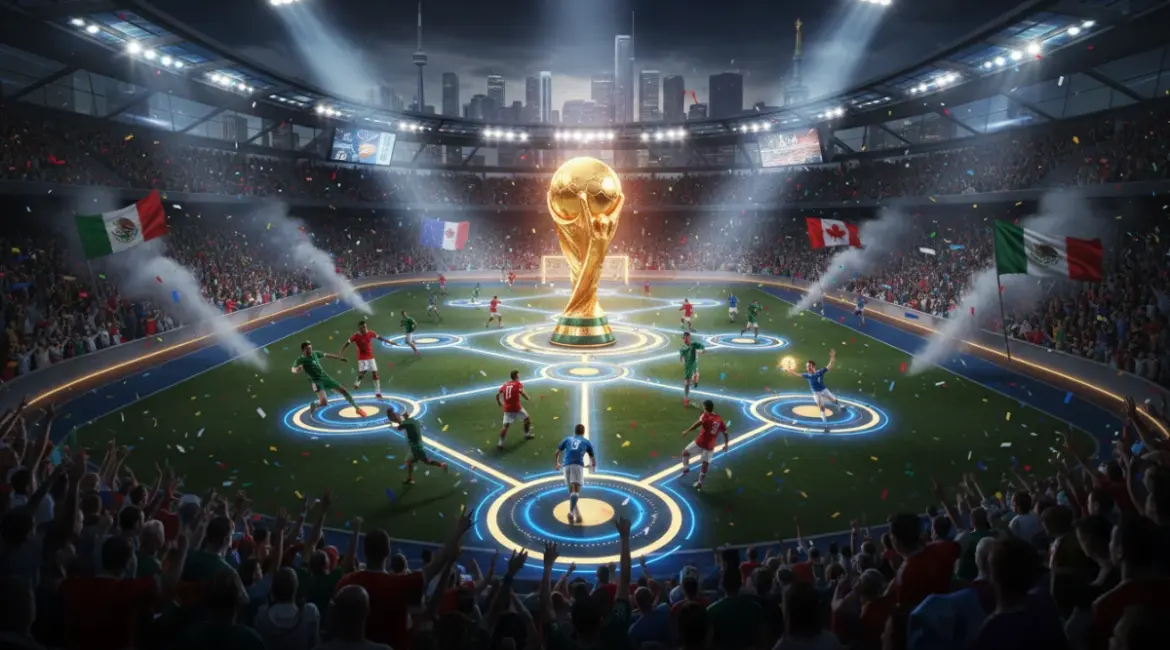
The 2026 edition of the world’s biggest soccer tournament is built to feel larger at every step. With 48 national teams, 104 matches, and three host nations sharing the schedule, the bracket is not just a path to the trophy; it is the structure that shapes the entire event. From the first whistle in the group stage to the final at MetLife Stadium, every result changes the way the knockout field takes form.
Why this edition looks so different
The most important change is simple: more teams mean more layers. Instead of the familiar eight groups of four, the tournament now uses 12 groups of four. Each team still plays three group matches, but the margin for error is smaller because so many teams will remain alive after the opening round.
The top two teams in every group advance automatically. In addition, the eight best third-place teams also move on, creating a 32-team knockout stage. That means the bracket opens wider, lasts longer, and gives more countries a real chance to survive beyond the group phase. For fans, that creates more drama. For teams, it creates more pressure because one poor performance may not end the story, but it can badly damage seeding and matchups later on.
How teams move from groups to knockouts
The group stage runs from June 11 through June 27, and it is the part of the tournament where bracket math starts immediately. Teams are ranked by points first, then goal difference, then goals scored. If teams are still level, head-to-head results, fair play points, and finally FIFA ranking are used to separate them.
That process matters most for the third-place teams. Only eight of the twelve third-place finishers qualify, so every goal can influence who gets through and which side of the bracket they land on. A team that sneaks through with a strong goal difference may avoid a top contender early, while one that scrapes in by the narrowest margin could face a far tougher road.
- Automatic qualifiers: the top two teams in each of the 12 groups
- Additional qualifiers: the eight highest-ranked third-place teams
- First knockout round: the Round of 32
- Match format: one game, no second leg, no replay
What the knockout path requires
From the Round of 32 onward, every match is sudden death. A team must win five straight knockout games to become champion, which is one more than the old 32-team format required. That extra round changes the rhythm of the tournament and rewards depth, patience, and smart squad rotation.
If a knockout match is tied after 90 minutes, the teams play 30 minutes of extra time. If the score is still level, the winner is decided by penalties. There are no away goals and no replays, so every match ends with a definite result on the day.
- Round of 32: June 28 to July 3
- Round of 16: July 4 to July 7
- Quarter-finals: July 9 to July 11
- Semi-finals: July 14 and July 15
- Third-place match: July 18
- Final: July 19 at MetLife Stadium in East Rutherford, New Jersey
Canada, the United States, and the bracket picture
Canada’s path is one of the most closely watched stories in the tournament. Placed in Group B with Bosnia and Herzegovina, Qatar, and Switzerland, Canada opens at Toronto’s BMO Field before heading to Vancouver for its next two matches. That travel pattern makes the group both exciting and demanding, especially with bracket placement waiting at the end of it.
If Canada finishes in the top two, it moves directly into the Round of 32. If it finishes third, qualification is still possible, but the team would need enough points and a strong enough goal difference to stay among the best third-place sides. The exact opponent in the knockout round depends on which group Canada comes from and how the final standings shake out across the tournament.
The United States also sits in a challenging group, and several major teams are spread across different sections of the bracket. That distribution is part of what makes the tournament compelling. If the seeded paths hold, fans could see heavyweight meetings later in the knockout rounds rather than immediately in the group phase.
Why the bracket matters for every fan
The bracket is more than a chart on a screen. It shapes travel, recovery time, opponent quality, and emotional momentum. A group winner earns a theoretically easier knockout draw, while a runner-up or third-place qualifier may face immediate danger. Because the event spans three countries and a packed calendar, even small details can affect the final outcome.
For supporters, that means following more than just scores. It means watching tiebreakers, tracking third-place races, and understanding how each group result changes the knockout map. The 2026 tournament is designed to keep more teams alive for longer, and that makes the bracket one of the most important parts of the whole competition.
To follow the latest official tournament information and bracket updates, visit FIFA.com/worldcup.