
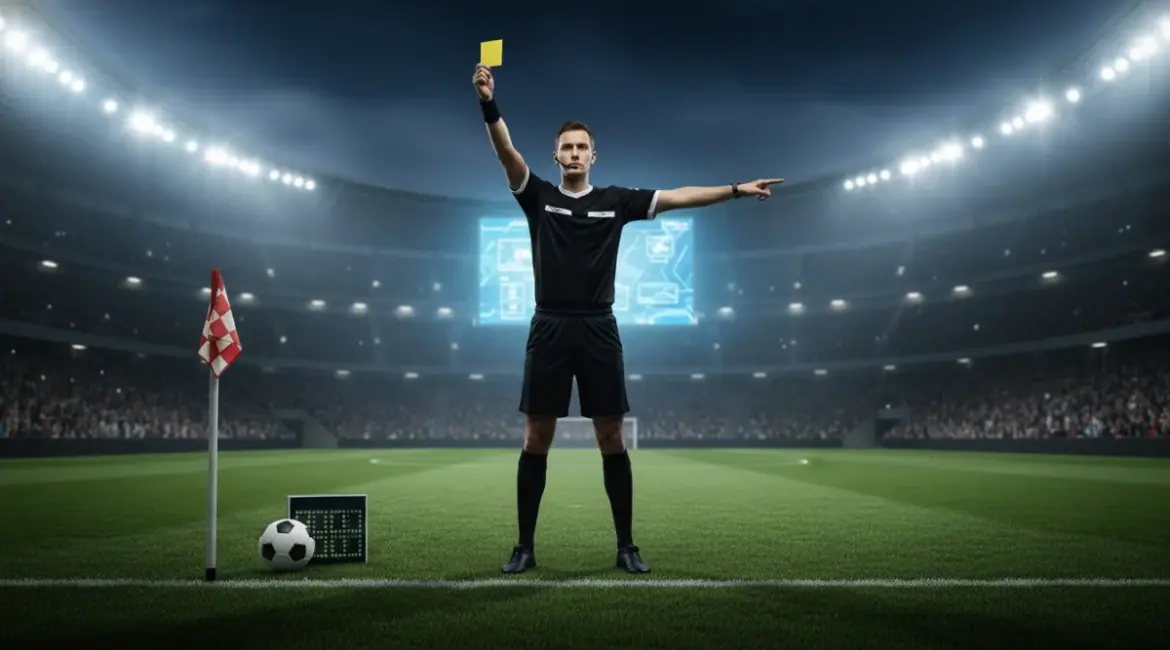
The 2026 FIFA World Cup is set to feel different not only because of its expanded field, but because several updated laws will reshape how matches unfold. The aim is straightforward: reduce delay, improve discipline, and give officials sharper tools for handling contested moments.
For players and coaches, these adjustments are not cosmetic. Small habits such as slow restarts, drawn-out substitutions, or heated exchanges near the referee may now carry much heavier consequences. For fans, that means a tournament with fewer gray areas and more visible enforcement.
What the Rulemakers Are Trying to Fix
Football’s lawmakers have targeted the parts of the game that create the most frustration: time-wasting, dissent, tactical gamesmanship, and uncertainty around video review. The 2026 tournament will be one of the biggest stages where these changes appear in real time, so teams will need to adapt quickly if they want to avoid avoidable punishments.
The broader intention is to make the sport easier to manage without stripping away its rhythm. That balance matters because World Cup matches often hinge on a single stoppage, a single protest, or a single refereeing decision.
The Most Important Changes, in Order
Several of the new laws are designed to work together. They do not all affect the game in the same way, but each one pushes the match toward faster restarts and stricter control. The sequence below shows the most notable updates and what they are meant to do.
-
Red cards for concealed confrontations: players who cover their mouths with a hand, sleeve, or shirt during an argument may be dismissed if the action appears connected to abuse or an attempt to hide what was said.
-
Penalties for walk-off protests: leaving the field in protest can now lead to a red card, and officials or staff who encourage the walk-off may also be sanctioned.
-
Strict restart clocks: visible countdowns will be used for throw-ins and goal kicks so teams cannot casually delay restarts.
-
Tighter substitution timing: substituted players will have a short window to exit and will be expected to leave by the nearest boundary point.
-
One-minute treatment exit: most outfield players treated on the field will have to leave briefly after play resumes.
-
Broader VAR authority: video review will cover more situations, including some second-yellow errors and clear mistaken identity cases.
-
Mandatory hydration breaks: every match will include pause time for player recovery, especially important in hot conditions across North America.
How These Laws Change Match Behavior
The biggest effect is likely to be psychological. Teams that have relied on irritation, delay, or selective drama to disrupt an opponent may lose that use. A goalkeeper who takes too long on a goal kick may no longer be buying time; the opposition could be handed a corner instead. A player who lingers over a substitution could slow the team down rather than help it conserve a lead.
That shift will also affect coaching decisions. Managers who once treated stoppages as mini time-outs may no longer be able to do that freely, especially if a goalkeeper injury is involved. The new framework is built to prevent hidden coaching meetings from being disguised as medical delays.
Where the Rules Bite Hardest
Some updates are more dramatic than others because they create direct competitive consequences. A lost restart, a forced exit after treatment, or a red card for protest can change momentum immediately. The table below shows how the main changes compare in practical terms.
| Rule Area | What Changes | Likely Match Impact |
|---|---|---|
| Confrontational behavior | Covering the mouth during a heated exchange can be punished with a red card | Players will be less able to hide abusive comments or suspicious conduct |
| Protest walk-offs | Walking off in protest can lead to dismissal and even forfeiture risk | Teams will think twice before turning disputes into public demonstrations |
| Throw-ins and goal kicks | Referees will use a five-second countdown for delayed restarts | Slow possession management becomes much riskier |
| Substitutions | Exiting players must leave quickly and by the nearest line | Sub changes become a more tightly controlled part of game management |
| VAR review | More errors, including second-yellow mistakes, can be reviewed | Officials gain more tools to correct obvious decisions |
Why Referees Are Getting More Power
Referees are not being asked to guess more; they are being given clearer authority in situations that previously produced confusion or controversy. That is especially important in a World Cup setting, where one disputed call can dominate the entire conversation around a match.
Expanded VAR review is a key part of that effort. A clearly wrong second-yellow dismissal, a mistaken booking of the wrong player, or a clear error on a corner kick can now be addressed more directly. The system is still not meant to review everything, but it is being widened enough to catch obvious mistakes that once slipped through.
The New Discipline Standard
Players will also have to manage emotions more carefully. A quick protest, a sarcastic gesture, or a cover-up of a mouth during an argument may now look more serious under the revised framework. That does not mean every heated exchange turns into a dismissal, but it does mean officials have a stronger basis for acting when behavior appears intended to conceal misconduct.
The same logic applies to off-field conduct. If players or staff try to use a pause in play as a chance to stall the match or orchestrate a walk-off, referees may respond faster and more firmly than before.
Medical Delays, Hydration, and Tactical Exploits
One of the clearest themes of the update is the attempt to separate genuine care from tactical delay. If medical staff enter to treat an outfield player, that player will generally need to step away for one minute once play restarts. The intention is to remove the incentive to use minor treatment as a strategic pause.
There are sensible exceptions. Goalkeepers, head injuries, collisions involving teammates, penalty takers, and serious injuries such as possible concussions are treated differently because player safety comes first. The same philosophy applies to hydration breaks, which are expected in every match and may be adjusted if another stoppage offers a natural break in play.
What Supporters Should Expect to See
Fans should notice more visible referee management around restarts, more discipline at the substitution bench, and a tighter approach to confrontation. In practical terms, that means fewer long pauses, more immediate consequences for delay, and a greater chance that seemingly minor incidents will be punished if they disrupt the match.
The experience may feel unfamiliar at first because some incidents that once passed without major attention will now draw stronger responses. Still, the overall goal is not complexity for its own sake. It is to keep the game flowing while reducing the behavior that most often frustrates players, officials, and spectators.
For teams that embrace the new expectations, the adjustment may be manageable. For teams that continue to rely on slow restarts, aggressive protests, or tactical stoppages, the 2026 World Cup could become a place where those habits are punished quickly and publicly.