
Three Forces Push Bitcoin Below $64,000
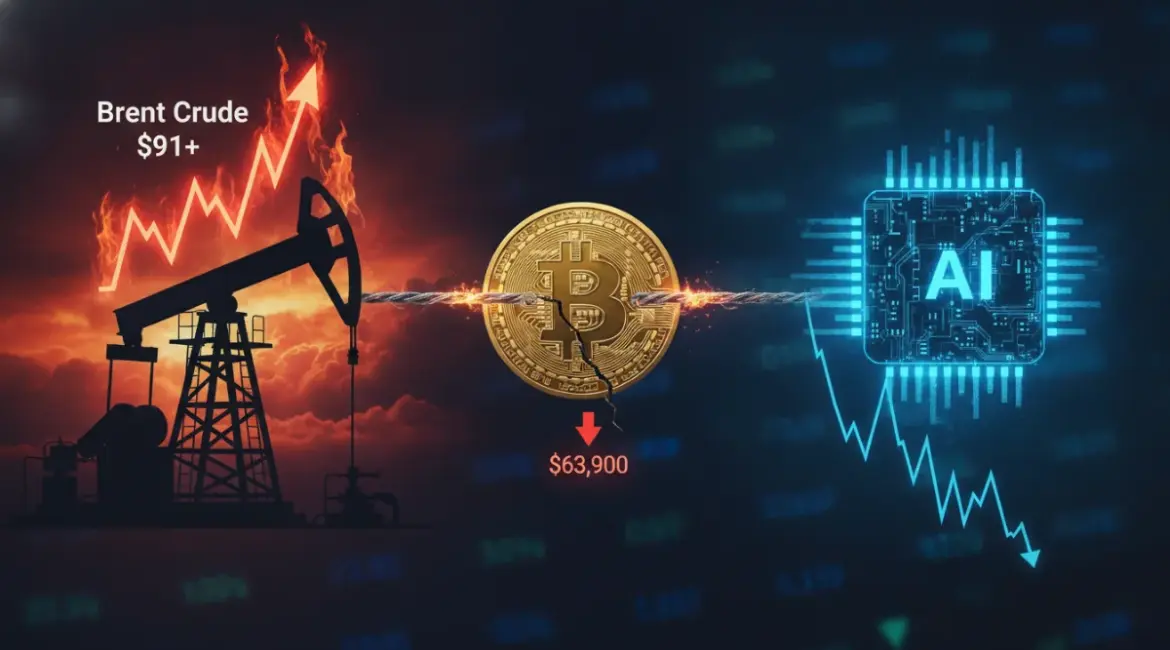
Bitcoin fell to $63,900 on July 20, 2026, dropping 1.3% in 24 hours as it slipped under the $64,000 threshold. This decline was not caused by a single event but by a convergence of three major pressures: escalating geopolitical conflict, rising oil prices, and a broad tech sector selloff. The cryptocurrency market is currently navigating a complex environment where inflation fears and risk aversion dominate investor sentiment. Key drivers include:
- Geopolitical Shock: Military strikes between the U.S. and Iran have intensified, triggering panic in global markets.
- Oil Price Spike: Brent crude surged past $91 per barrel, its highest level in a month, reigniting fears of renewed inflation.
- AI Sector Weakness: Disappointing earnings from Asian chip manufacturers, particularly in South Korea, sparked a tech selloff that dragged down crypto valuations.
Shaurya Malwa, a Crypto Market Analyst at Bullish Inc., noted that Bitcoin’s dip reflects a “tug-of-war” between inflation anxiety driven by energy costs and uncertainty in the tech sector. Investors are currently positioning portfolios cautiously as these conflicting macro forces create volatility.
Cryptocurrency Market Performance Breakdown
The broader crypto market mirrored Bitcoin’s decline, with major assets experiencing modest losses. Ethereum (ETH) softened by 1.1% to $1,850, while Binance Coin (BNB) and XRP also saw slight decreases. A notable outlier was Hyperliquid’s HYPE token, which suffered an 8% weekly loss, highlighting sector-specific volatility. The following table summarizes the price performance of key assets as of July 20, 2026:
| Cryptocurrency | Price (July 20, 2026) | 24h Change | Weekly Change |
|---|---|---|---|
| Bitcoin (BTC) | $63,900 | -1.3% | +2.0% |
| Ethereum (ETH) | $1,850 | -1.1% | — |
| Binance Coin (BNB) | $564 | -0.8% | — |
| XRP | $1.09 | – | — |
| Dogecoin (DOGE) | — | -1.4% | — |
| Hyperliquid (HYPE) | $60 | — | -8.0% |
While Bitcoin remains up 2% on the week, the daily drop signals a shift in short-term momentum as traders react to external macroeconomic shocks.
Geopolitics and the Oil-Crypto Connection
The link between rising oil prices and falling crypto prices is rooted in inflation mechanics. When energy costs spike, they often lead to broader inflationary pressures, prompting investors to anticipate higher interest rates or tighter monetary policy. Historically, such environments reduce risk appetite, causing capital to flee speculative assets like cryptocurrencies. Dr. Linda Chen, an economist from the Global Economic Forum, explained that “inflationary concerns stemming from geopolitical conflicts typically prompt investors to shift away from riskier assets including cryptocurrencies, driving price corrections”. The U.S.-Iran conflict has directly contributed to this fear, as Brent crude climbed above $91 a barrel, reinforcing the narrative that inflation may not be as contained as recent data suggested.
AI Selloff Spills Into Crypto Markets
Beyond geopolitics, the tech sector’s weakness has created a “sentiment spillover” effect. The selloff originated from disappointing earnings reports by major AI chip companies in Asia, causing South Korea’s Kospi index to drop 3.5%. Since cryptocurrencies are often perceived as technology-linked assets, they face downward pressure when tech stocks decline. Shaurya Malwa emphasized that the AI chip selloff represents a “sector rotation and risk recalibration” that indirectly impacts crypto markets. Investors are reassessing exposure to technology innovation across the board, including blockchain and digital assets, leading to a broader reduction in risk capital allocated to the sector.
ETF Flows and Market Sentiment Outlook
Despite the turbulence, Bitcoin ETFs recorded small inflows recently, suggesting some investors view the lower price levels as a buying opportunity. However, these inflows remain modest compared to the significant outflows seen in prior weeks. CoinDesk Research described these inflows as “peanuts” relative to the recent exodus, highlighting fragility in investor confidence amid ongoing macroeconomic uncertainties. Market uncertainty is expected to persist until clear signals emerge regarding inflation trends and tech sector stability. Analysts foresee a range of outcomes, from cautious consolidation to a gradual recovery contingent on positive macro developments. Investors should monitor geopolitical developments, inflation data, and tech sector trends closely, as these factors will likely dictate crypto market trajectories in the near term. Volatility remains inherent to cryptocurrencies, especially during periods of macroeconomic stress. Investors are advised to maintain awareness of risks and avoid overexposure to speculative assets during such turbulent times.