
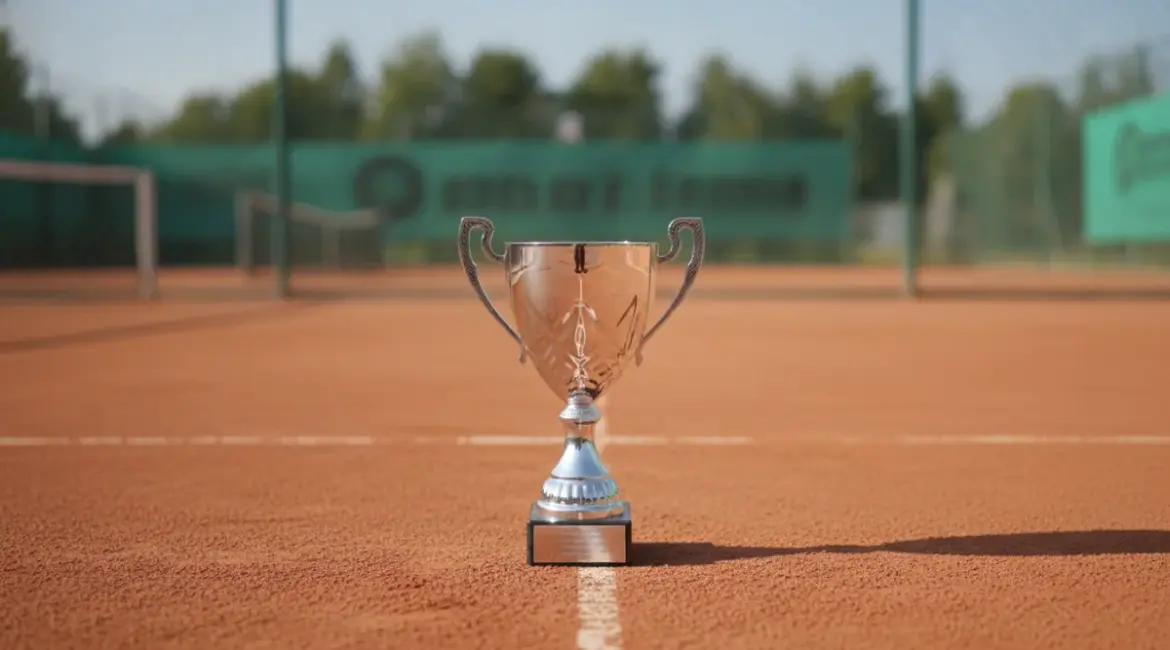
The landscape of professional men’s tennis underwent a seismic shift this past weekend at the Caja Magica, as Jannik Sinner further cemented his status as the undisputed ruler of the court. In a final that was as brief as it was breathtaking, the Italian phenom secured his first Madrid Open title by overwhelming Alexander Zverev with a 6-1, 6-2 scoreline. This victory was not merely about lifting another trophy; it represented a historic milestone that no player in the history of the sport had ever achieved. By claiming the title in the Spanish capital, Sinner has now won five consecutive ATP Masters 1000 tournaments, a feat of consistency and excellence that eluded even the most dominant eras of the legendary Big Three.
Entering the match, many analysts expected a tightly contested battle given Zverev’s formidable record in Madrid. The German had previously hoisted the trophy twice and generally thrives in the high-altitude conditions of the city, where the ball travels faster and his massive serve becomes even more of a weapon. However, those expectations were quickly dismantled by Sinner’s clinical precision. From the opening coin toss, the 24-year-old world number one dictated the terms of engagement, moving his opponent from corner to corner with a level of depth and pace that seemed impossible to neutralize. The result was a masterclass in modern baseline aggression that left the crowd in awe and his opponent searching for answers that simply did not exist on the day.
A Masterclass Performance on the Red Clay of Madrid
The technical brilliance Sinner displayed during the final was a culmination of the immense work he and his coaching staff have put in over the last few seasons. Known primarily as a hard-court specialist in his teenage years, Sinner has successfully adapted his sliding and point construction to become a terrifying force on the red clay. Against Zverev, he showed no signs of the physical fatigue one might expect after such a long winning streak. Instead, he looked fresher and more focused than ever. He converted every single break point opportunity he earned, a statistical rarity that highlights his “clutch” gene, while simultaneously protecting his own serve with an iron will. Not once did he face a break point, a testament to his improved serve variety and his ability to start points on the front foot.
Zverev, who remains one of the elite competitors on the tour, appeared visibly frustrated as the match progressed. Every time the German attempted to inject pace into a rally, Sinner redirected the ball with even greater velocity. The Italian’s timing was so impeccable that even Zverev’s most powerful strikes were met with effortless counter-punches. After the match, the German was remarkably candid about his performance, acknowledging that he had played poorly but also admitting that Sinner’s current level makes him almost impossible to beat regardless of one’s own form. The gap between the world number one and the rest of the top ten felt wider than ever under the bright lights of the stadium.
The significance of this specific victory cannot be overstated for Sinner’s personal career trajectory. In his three previous visits to Madrid, the Italian had never managed to progress past the quarter-final stage. The conditions here, characterized by the altitude and the slickness of the clay, had previously acted as a puzzle he could not quite solve. By conquering these unique environmental factors, he has proven that there is no longer a surface or a setting where he can be considered vulnerable. This breakthrough in Madrid serves as a terrifying warning to the rest of the tour as the season transitions toward the second Grand Slam of the year.
Rewriting the Record Books with Five Successive Titles
While winning a Masters 1000 title is a crowning achievement for most players, Sinner’s current run has entered the realm of the legendary. His streak began in late 2025 at the Paris Masters and has continued unabated through Indian Wells, Miami, Monte Carlo, and now Madrid. This five-tournament sequence is record because it spans across different continents, different time zones, and drastically different surfaces. From the fast indoor hard courts of France to the slow, humid clay of Monaco and the thin air of Madrid, Sinner has remained the common denominator of success. Not even Rafael Nadal during his peak clay dominance or Roger Federer during his mid-2000s hard-court reign managed to string together five consecutive Masters titles without a single stumble.
This achievement highlights the modern demands of the sport and Sinner’s ability to meet them. The physical toll of playing so many matches at such a high intensity is usually enough to cause a dip in form or a minor injury, yet Sinner appears to have optimized his recovery and scheduling to perfection. His team, led by Simone Vagnozzi and Darren Cahill, has clearly prioritized longevity and peak performance, ensuring that the young Italian arrives at every tournament with the mental and physical freshness required to dominate. This discipline is what Sinner often credits for his results, emphasizing that the work done behind the scenes in the gym and on the practice courts is the true foundation of his historic streak.
When asked about the record during the trophy ceremony, Sinner remained characteristically humble. He spoke about the dedication required to maintain such a high standard and the sacrifices he has made to reach the pinnacle of the sport. For Sinner, the records are a byproduct of a process-oriented mindset. He is less concerned with the history books and more focused on the next ball, the next game, and the next opponent. However, for the fans and historians of the game, this 23-match winning streak represents the dawn of a new era in tennis, one where the margins for error for anyone facing the Italian have become virtually non-existent.
Zverev and the Reality of an Ever-Widening Talent Gap
The post-match commentary from Alexander Zverev provided a fascinating insight into the psyche of the current locker room. Zverev is not a player known for downplaying his own abilities; he is a multiple-time Masters champion and a consistent threat at the majors. Yet, his admission that there is a “big gap” between Sinner and the rest of the field was a sobering moment for the sport. It suggested that even the world’s third-best player felt somewhat helpless against the onslaught of the Italian’s game. This sentiment is becoming increasingly common among the ATP elite, who are finding that their traditional strengths are being neutralized by Sinner’s all-court proficiency.
The rivalry between Sinner and Zverev has tilted heavily in one direction over the past year. With four straight defeats in high-stakes matches this season alone, Zverev must now go back to the drawing board to figure out how to disrupt Sinner’s rhythm. The German’s struggle in Madrid was particularly telling because it took place on a surface he generally loves. If Zverev cannot find a way to challenge Sinner in Madrid, the questions about how anyone will stop him on the slower clay of Roland Garros become even more pressing. The tactical battle has shifted from a contest of skill to a search for any minor weakness in a game that currently appears to have none.
Beyond Zverev, the rest of the tour is also feeling the pressure. Players like Carlos Alcaraz, who has dealt with his own injury concerns recently, are now watching as Sinner pulls away in the rankings. The competition for the year-end number one spot, which usually remains a tight race until the autumn, may well be decided before the grass-court season even begins if this level of dominance continues. The narrative of the 2026 season has been entirely written by Sinner’s racquet, leaving the rest of the field to fight for the remaining spots on the podium while the Italian stands alone at the top.
The Final Hurdle on the Path to a Career Golden Masters
With Madrid now in the rearview mirror, all eyes turn toward the Eternal City. The Italian Open in Rome is the next major stop on the calendar, and for Jannik Sinner, it represents the final piece of a very prestigious puzzle. Having won every other Masters 1000 title currently on the tour, Rome is the only trophy missing from his collection. If he were to emerge victorious in his home country, he would become only the second man in history, after Novak Djokovic, to complete the career Golden Masters. This achievement requires winning all nine active Masters 1000 tournaments at least once, a feat that requires incredible versatility and longevity across different playing conditions.
Playing in Rome brings a unique set of challenges and rewards for Sinner. The Italian fans are among the most passionate in the world, and the “Sinner-mania” that has gripped the nation will surely reach a fever pitch when he steps onto the clay at the Foro Italico. While the home crowd provides immense support, it also brings a level of expectation that can be daunting. Sinner has handled pressure with remarkable poise throughout his career, but winning in front of his compatriots to complete a historic milestone will be perhaps his greatest psychological test yet. The atmosphere is expected to be electric, with every match featuring the world number one likely to be a sold-out event.
Ultimately, the Madrid Open was more than just a tournament win; it was a declaration of intent. Sinner has shown that he can win anywhere, against anyone, and under any circumstances. His transition from a promising talent to a historical juggernaut is now complete. As he prepares for the final stretch of the clay-court season, the tennis world is left wondering not if he will win again, but how long this incredible reign can last. With the form he displayed in the Spanish capital, it would be a brave soul to bet against him making even more history in the weeks to come.